Nigeria Bleeds: 734 Souls Lost to Relentless Violence in May
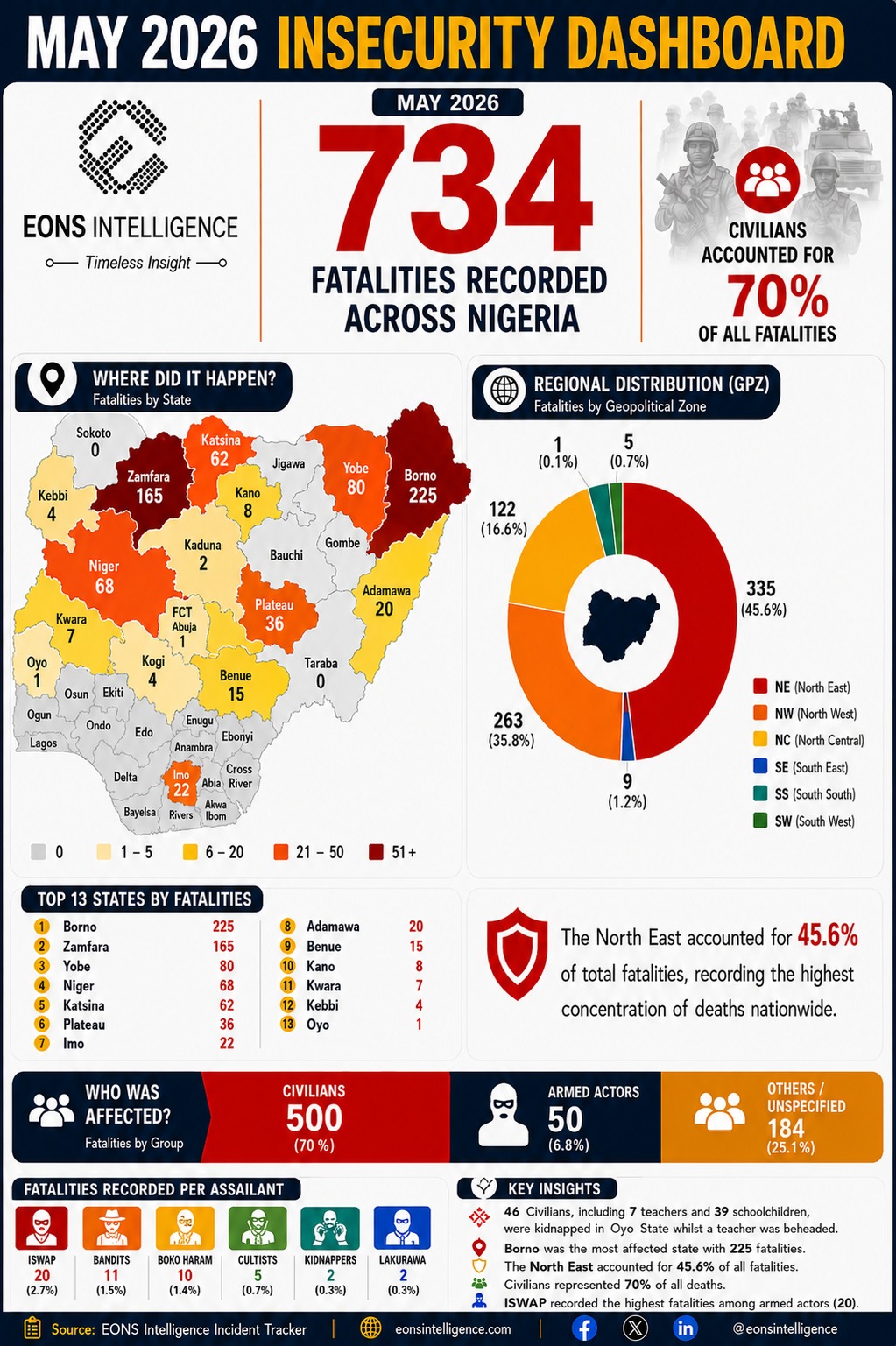
Abuja, Nigeria – June 3, 2026- As Nigeria continues to grapple with a devastating wave of insecurity as fresh data reveals that 734 people lost their lives to violence in May 2026 alone.
This grim toll includes 111 security personnel and a heartbreaking 500 civilians, painting a picture of a nation where fear has become a daily companion for millions.
The EONS Intelligence Incident Tracker, a respected source for security monitoring, released its May 2026 Security Dashboard, which lays bare the unrelenting crisis.
“Our May 2026 Security Dashboard highlights the continued impact of insecurity across Nigeria, with the North-East remaining the most affected region and terrorist attacks accounting for the highest number of fatalities,” the report stated.
This monthly figure adds to an already alarming trend. Earlier quarters of 2026 saw over 2,300 deaths nationwide, according to various trackers, with the North-East bearing the heaviest burden from groups like Boko Haram and ISWAP.
Terrorist activities dominated the fatalities in May, reflecting the persistent threat these insurgents pose despite military claims of neutralizing hundreds of fighters in operations like Hadin Kai.
Human Stories Behind the Numbers
Behind these statistics lie shattered families and communities living in constant dread.
In the North-East, entire villages face repeated raids, with residents torn between fleeing their homes or risking death.
Farmers abandon fields, students miss school, and parents live in anxiety over possible abductions.
The loss of 111 security personnel further strains an already overstretched military and police force, many of whom make the ultimate sacrifice while protecting citizens.
This May’s violence aligns with broader patterns documented throughout 2025 and early 2026.
The Global Terrorism Index 2026 ranked Nigeria fourth globally in terrorism impact, noting a 46% rise in terror-related deaths in 2025.
Banditry in the North-West, farmer-herder clashes in the North-Central, and separatist tensions in the South-East compound the national emergency.
Recent incidents, including deadly airstrikes with reported civilian casualties and mass kidnappings, have drawn international concern from bodies like the UN and Amnesty International.
Government Response and Public Frustration
While the military reports successes, such as joint U.S.-Nigeria strikes that eliminated key terrorist leaders in May, ordinary Nigerians question the overall strategy.
Many wonder why, despite billions spent on security, the body count keeps rising.
Critics argue that poor intelligence sharing, corruption, and inadequate equipment continue to undermine efforts.
The human cost runs deeper than numbers. Widows mourn husbands, children grow up orphaned, and communities lose breadwinners.
Economic activity suffers as farmers and traders avoid high-risk areas, worsening food insecurity in a country already battling inflation and poverty.
As Nigeria marks another month of bloodshed, the EONS report serves as a sobering reminder that decisive, coordinated action is urgently needed.
Experts call for enhanced community intelligence networks, better-funded non-kinetic approaches, and stronger regional cooperation to stem the tide.
Until tangible improvements emerge, families across the North-East and beyond will continue burying their loved ones while praying for a safer tomorrow.
The question remains: how many more lives must be lost before lasting peace takes root?
 news
news VIDEO: Oshiomhole Explodes Over Insecurity, Confronts Akpabio In Senate
 world
world Kainji Forest Becoming Haven for Killers, Senator Raises Alarm
 news
news Demolished Memorial Reignites Painful Owo Attack Memories
 news
news Court Jails One for N2.9m Crypto Fraud in Maiduguri
 news
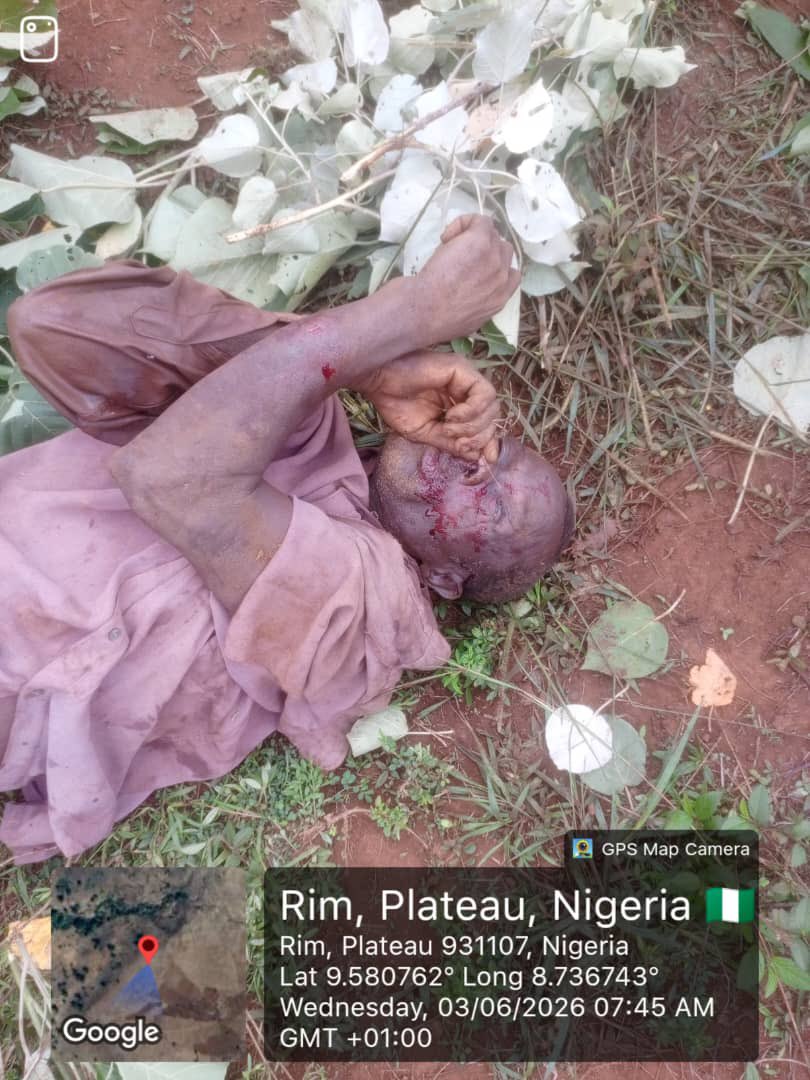
news Tragedy Strikes as Community Leader Found Murdered in Plateau Village
How do you feel about this news?
Community Additions
Have a news tip, correction, or extra context about this story? Post it below instantly. All submissions appear live on this screen immediately.