Speaker Dumps APC After Nearly 10 Years, Hints at New Political Direction
Asaba, Delta State — Former Speaker of the Delta State House of Assembly, Rt. Hon. Victor Onyekachi Ochei, has officially resigned from the All Progressives Congress (APC), ending a political relationship that lasted almost a decade and adding fresh momentum to the wave of political realignments currently reshaping Delta State ahead of the 2027 elections.
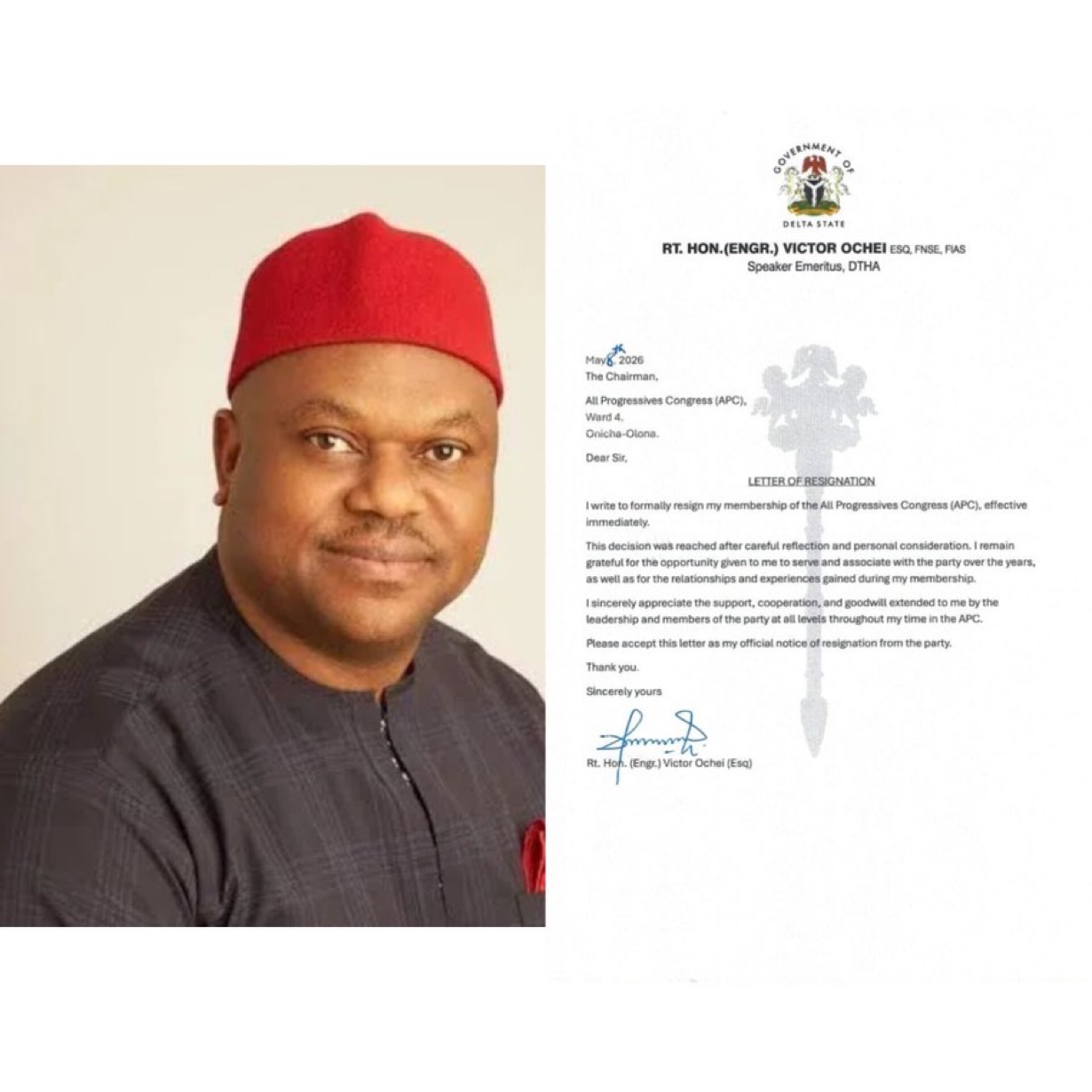
Ochei’s resignation was communicated in a letter dated May 8, 2026, and addressed to the APC Chairman of Ward 4 in Onicha-Olona, Aniocha North Local Government Area. Although the letter was written earlier in the month, his media team made it public on Thursday, May 28, triggering widespread reactions across political circles and social media.
A trained chemical engineer and one of the most influential political figures in Delta North, Ochei explained that his decision came after extensive consultations and careful personal reflection. He thanked the APC for the opportunities and relationships he built during his years in the party, while also pointing to his contributions toward strengthening the party’s grassroots presence across Delta State.
According to him, his involvement in building and expanding the APC structure in Delta began long before many current members joined the party.
“I hereby formally resign my membership of the All Progressives Congress (APC), effective immediately,” part of the letter read. “This decision was taken after deep reflection and personal consideration. I remain grateful for the privilege of serving and associating with the party over the years.”
Ochei served as Speaker of the Delta State House of Assembly between 2011 and 2015 and remains one of the longest-serving occupants of the position. In his statement, he described his exit from the APC as a necessary step toward a broader political vision centered on service, development, and the advancement of his people.
He stressed that his resignation was not motivated by anger, bitterness, or conflict with anyone within the party. Rather, he said the move reflects his desire to continue pursuing democratic ideals and meaningful political growth through a new path.
The former Speaker also expressed appreciation to party leaders, loyal supporters, and political associates who worked with him during his stay in the APC. He urged his followers to remain peaceful, committed to democratic values, and hopeful as he begins a new phase of his political journey.
Interestingly, Ochei did not disclose his next political destination, leaving room for speculation about a possible move to another platform such as the Peoples Democratic Party (PDP) or the African Democratic Congress (ADC), which has recently gained increased national attention following political coalition talks and opposition movements.
His resignation comes at a sensitive period for the APC in Delta State, where the party has witnessed a growing number of high-profile defections. Just days earlier, former Deputy Senate President Ovie Omo-Agege also resigned from the APC after losing the Delta Central Senatorial primary election.
Political observers believe these exits expose deeper cracks within the party, including internal disagreements, leadership struggles, and concerns among some members over their future prospects within the APC structure in Delta State.
On social media, reactions to Ochei’s departure were swift and intense. Many supporters described the move as a major political shift capable of influencing power dynamics across Delta North and the wider Anioma region. Some analysts believe his departure could encourage more defections from loyalists and grassroots supporters who have long aligned with his political network.
Others praised the calm and mature tone of his resignation letter, noting that it stood out from the hostile exchanges that often accompany political defections in Nigeria.
Given Ochei’s political weight and longstanding influence, many believe his next move could significantly shape the political calculations ahead of the 2027 governorship and legislative elections in Delta State. As a former governorship aspirant with a strong support base, his alignment with any political platform could alter existing alliances and voting patterns.
For the APC, the development presents another challenge in a state where the PDP has traditionally maintained dominance. Meanwhile, opposition parties are likely to see Ochei as a valuable addition capable of attracting supporters and strengthening their structures ahead of future contests.
Analysts say the development also reflects a broader trend in Nigerian politics, where shifting alliances, personal ambitions, and public dissatisfaction continue to influence party loyalty and electoral strategies.
Despite leaving the APC, Ochei’s message focused heavily on unity, service, and progress rather than confrontation. Still, his departure raises fresh questions about the future stability of the party in Delta State and whether more political heavyweights may soon follow the same path.
As preparations for the 2027 elections gradually gather momentum, attention will now turn to Ochei’s next political move and the possible impact it may have on the changing political landscape in Delta State.
How do you feel about this news?
Anonymous Updates & Reader Additions
Have a news tip, correction, or extra context about this story? Post it below anonymously. Submissions appear live on this screen immediately after moderation approval.